
The Starry Night
- Write a review
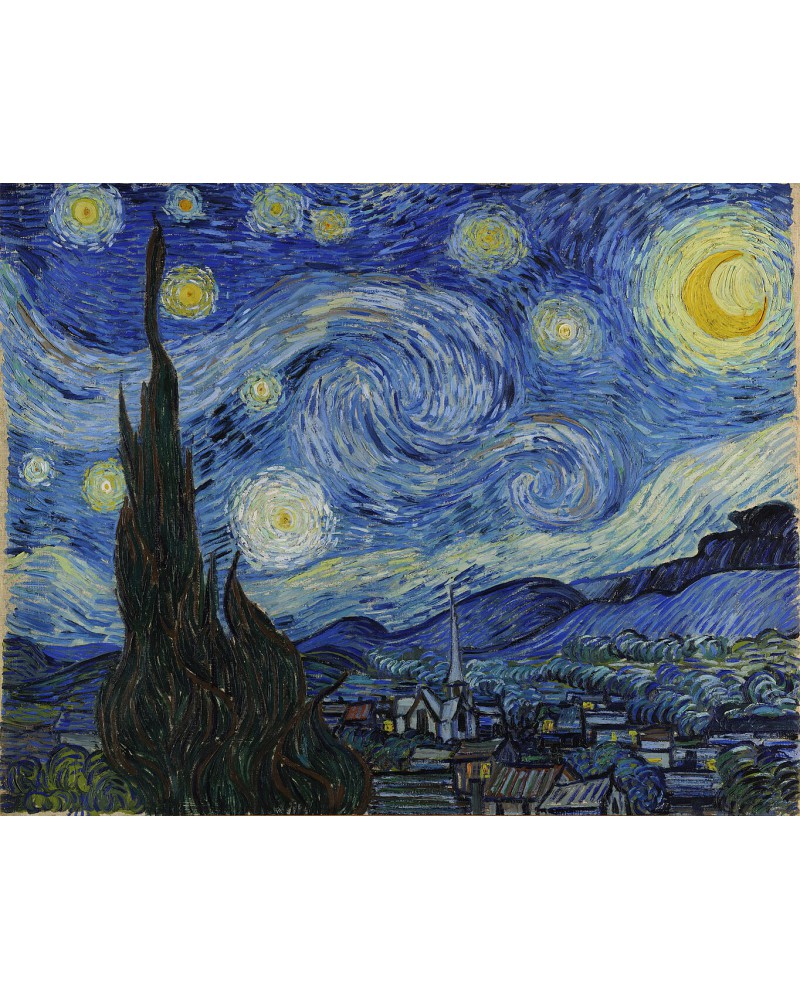
The Starry Night (1889) by Vincent van Gogh is a mesmerizing depiction of a night sky filled with swirling clouds, bright stars, and a luminous crescent moon. Painted during his stay at the Saint-Paul-de-Mausole asylum, the work reflects Van Gogh’s emotional intensity and connection to nature. The dynamic, flowing brushstrokes and vibrant colors convey movement and energy, blending realism and imagination. Dominated by the celestial sky, the painting also features a quiet village and a towering cypress tree, symbolizing a bridge between earth and the heavens. It remains one of the most iconic and celebrated works in Western art.
The Starry Night is an oil-on-canvas painting by the Dutch Post-Impressionist painter Vincent van Gogh, painted in June 1889. It depicts the view from the east-facing window of his asylum room at Saint-Rémy-de-Provence, just before sunrise, with the addition of an imaginary village. It has been in the permanent collection of the Museum of Modern Art in New York City since 1941, acquired through the Lillie P. Bliss Bequest. Widely regarded as Van Gogh's magnum opus, The Starry Night is one of the most recognizable paintings in Western art.
- Weight
- 0.3 g
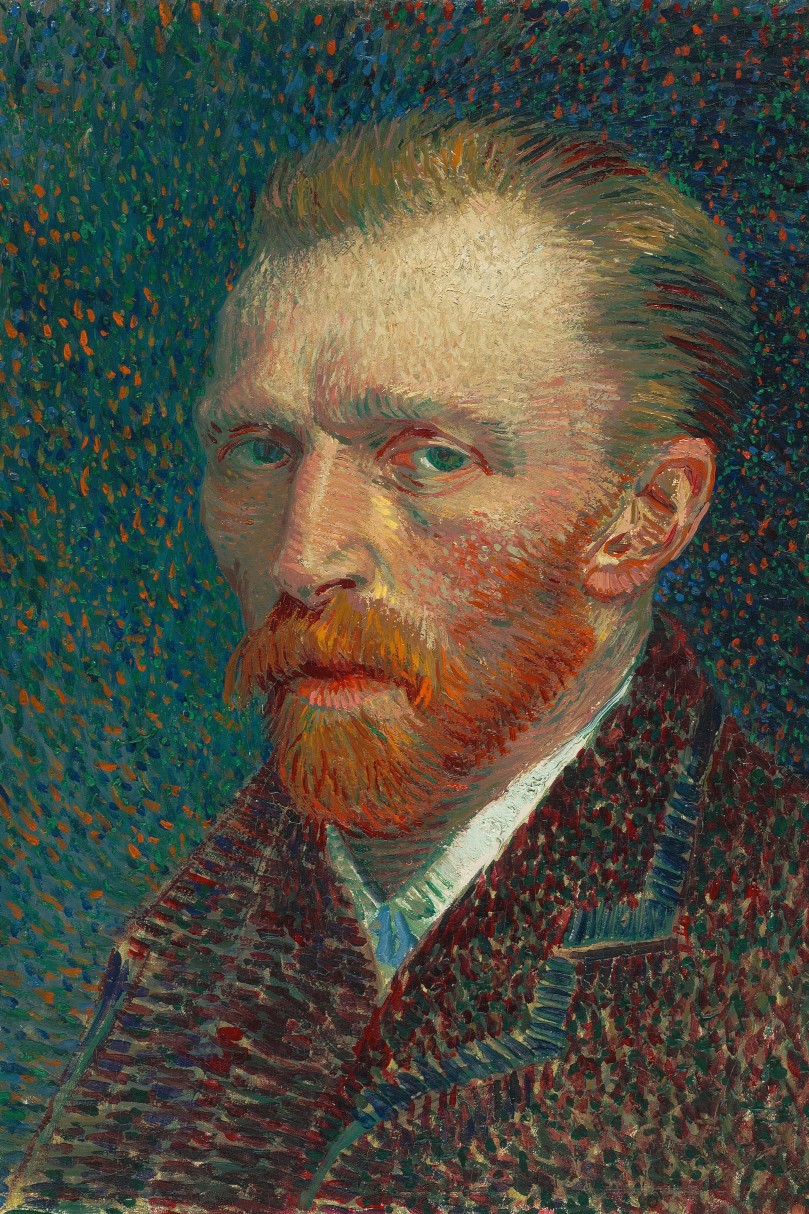
Vincent van Gogh (1853–1890) was a Dutch post-impressionist painter whose works are among the most iconic and influential in Western art history. Despite a career lasting just over a decade, Van Gogh produced more than 2,100 artworks, including about 860 oil paintings. His pieces are celebrated for their bold use of color, expressive brushwork, and emotive intensity, which vividly convey his inner struggles and passion for art.
Born in Zundert, Netherlands, Van Gogh initially pursued various careers, including art dealing, teaching, and preaching, before committing to painting in his late twenties. His early works, such as The Potato Eaters (1885), reflect a somber, earthy palette and focus on the hardships of peasant life. Influenced by Impressionist and Neo-Impressionist techniques during his time in Paris, he began experimenting with lighter colors, dynamic compositions, and innovative techniques.
Van Gogh’s most productive period came after moving to Arles in southern France in 1888. There, he created some of his most celebrated works, including Sunflowers, The Starry Night, and The Bedroom. His paintings from this time are marked by swirling, rhythmic patterns and vibrant, symbolic hues. However, his mental health deteriorated, leading to episodes of psychosis and hospitalizations. Despite his struggles, Van Gogh continued to paint prolifically, often finding solace in nature and art.
Van Gogh’s life was marked by poverty, loneliness, and a lack of recognition. He sold only a few paintings during his lifetime, relying on the support of his younger brother Theo, an art dealer. Tragically, he died by suicide at the age of 37, leaving behind a legacy of profound artistic achievement.
Today, Van Gogh is celebrated as a pioneer of modern art, whose deeply personal and visionary works resonate across generations. His life and art embody the transformative power of creativity and the enduring human spirit.
The Starry Night (1889) by Vincent van Gogh is a mesmerizing depiction of a night sky filled with swirling clouds, bright stars, and a luminous crescent moon. Painted during his stay at the Saint-Paul-de-Mausole asylum, the work reflects Van Gogh’s emotional intensity and connection to nature. The dynamic, flowing brushstrokes and vibrant colors convey movement and energy, blending realism and imagination. Dominated by the celestial sky, the painting also features a quiet village and a towering cypress tree, symbolizing a bridge between earth and the heavens. It remains one of the most iconic and celebrated works in Western art.